Building the Distribution Layer
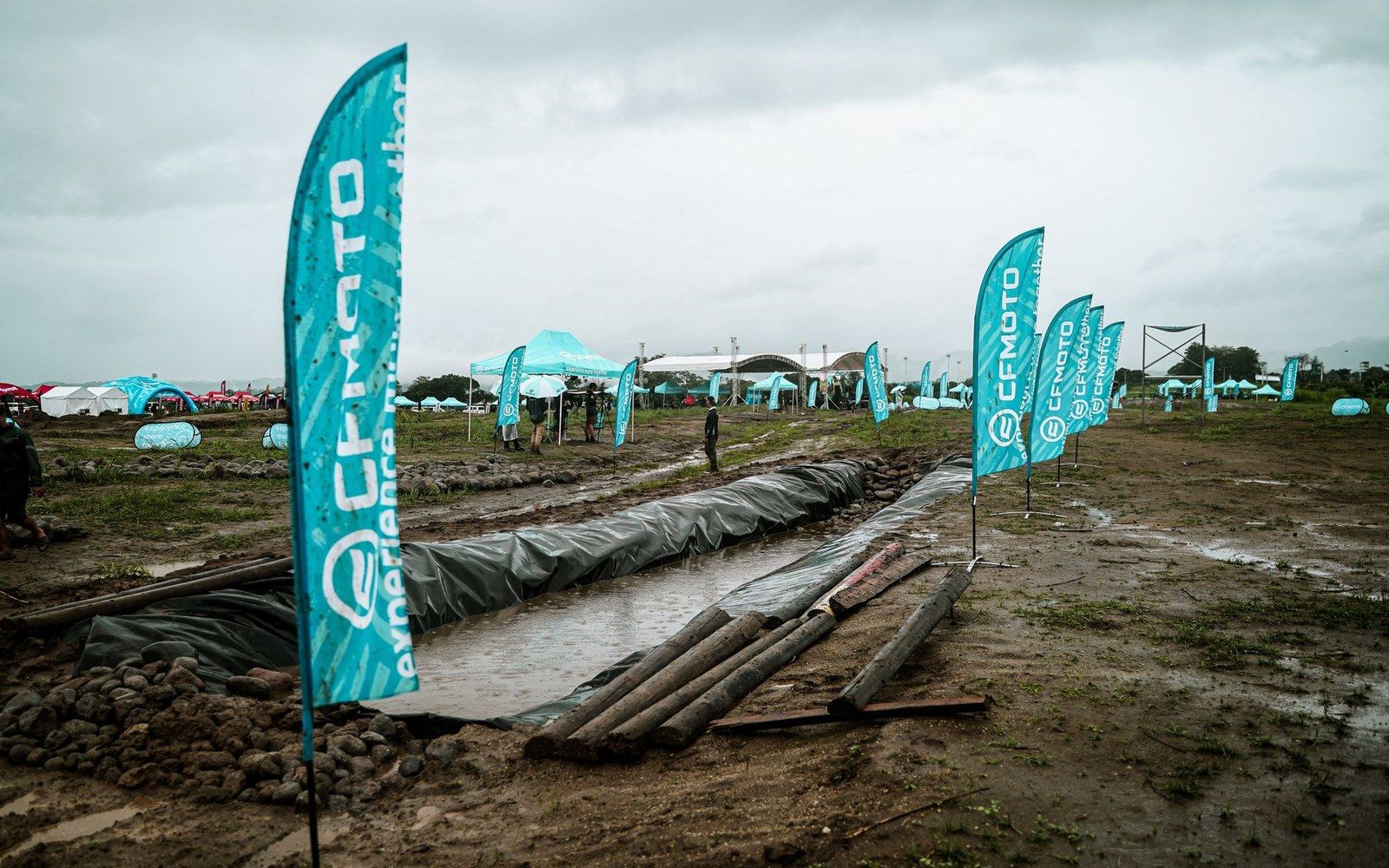
Chinese mid-displacement manufacturers have spent the better part of a decade doing something Japanese brands took forty years to accomplish: building credible dealer networks in Europe and Australasia without first establishing a reputation in premium motorsport. CFMoto, the Hangzhou-based subsidiary of CF Moto International, has moved furthest and fastest. By 2023 it reported sales across more than 100 countries, with European distribution anchored by a long-running technical partnership with KTM AG ↗ — an arrangement that gave CFMoto access to Austrian engineering validation while giving KTM a manufacturing partner capable of volume that Mattighofen could not match at price points below €6,000.
That partnership has produced tangible product: the CFMoto 450 series shares developmental lineage with KTM's own 390 platform, and the 700-series parallel twins occupy the mid-displacement segment where Royal Enfield, Triumph and an expanding roster of Chinese brands are now all competing for the same buyer. The segment — broadly 250cc to 750cc — is where global volume is actually won or lost, and Chinese manufacturers understand this arithmetically in a way that some European brands still do not.
Zontes, headquartered in Guangzhou, has targeted Europe through a different route: direct distributor agreements in Spain, Italy and the Netherlands, countries where small-displacement commuter culture already exists and where a 350cc machine at a competitive price point meets a real unmet need rather than an aspirational one. The brand's 350-series machines arrived in European showrooms between 2021 and 2023, and while independent sales volume figures are not published with the granularity of, say, ACEM's pan-European data, ACEM's registration tracking has begun capturing Chinese-origin brands as a distinct category — a statistical acknowledgment that the category exists.
Benelli, Voge and the Ownership Question
Benelli complicates the narrative. Founded in Pesaro in 1911, it is Italian in history and name, but since 2005 it has been owned by the Qianjiang Group, the Zhejiang-based conglomerate that also produces motorcycles under its own marque and supplies powertrains across the Chinese industry. Benelli's TRK 502 adventure tourer became a genuine seller in developing markets and in parts of Southern Europe precisely because it carried a European name over Chinese manufacturing economics — a combination that a buyer who knows the ownership structure may evaluate differently from one who does not. The TRK 800, introduced to expand the range upward, represents the same strategy at higher displacement.
Voge, part of the Loncin group, has pursued Australian distribution more aggressively than most of its contemporaries. Loncin's partnership with BMW Motorrad — the German brand sources its parallel-twin engines from Loncin — gives Voge a technical credibility argument similar to CFMoto's KTM connection, even though BMW Motorrad and Voge occupy entirely different market positions. Australia's relatively relaxed import certification environment and its appetite for adventure-touring machines in the 500–800cc range have made it a useful proving ground before European scaling.
The structural question underneath all of this is whether distribution depth converts to brand loyalty. Japanese manufacturers built Western markets by winning races, then selling the road versions of the race machines. Honda's cumulative production record and the culture it represents took decades and a MotoGP grid to construct. Chinese brands are entering on price and specification, not heritage, which means the retention problem — keeping a buyer who came in on value returning for a second machine — remains genuinely unsolved. CFMoto's motorsport sponsorships in Australian Superbike racing are a deliberate response to that gap. ACEM data published in 2023 on European powered-two-wheeler registrations suggests the Chinese share is growing, but from a base still well below five percent in the major Western markets.
The distribution layer is real. The brand layer is still being constructed.