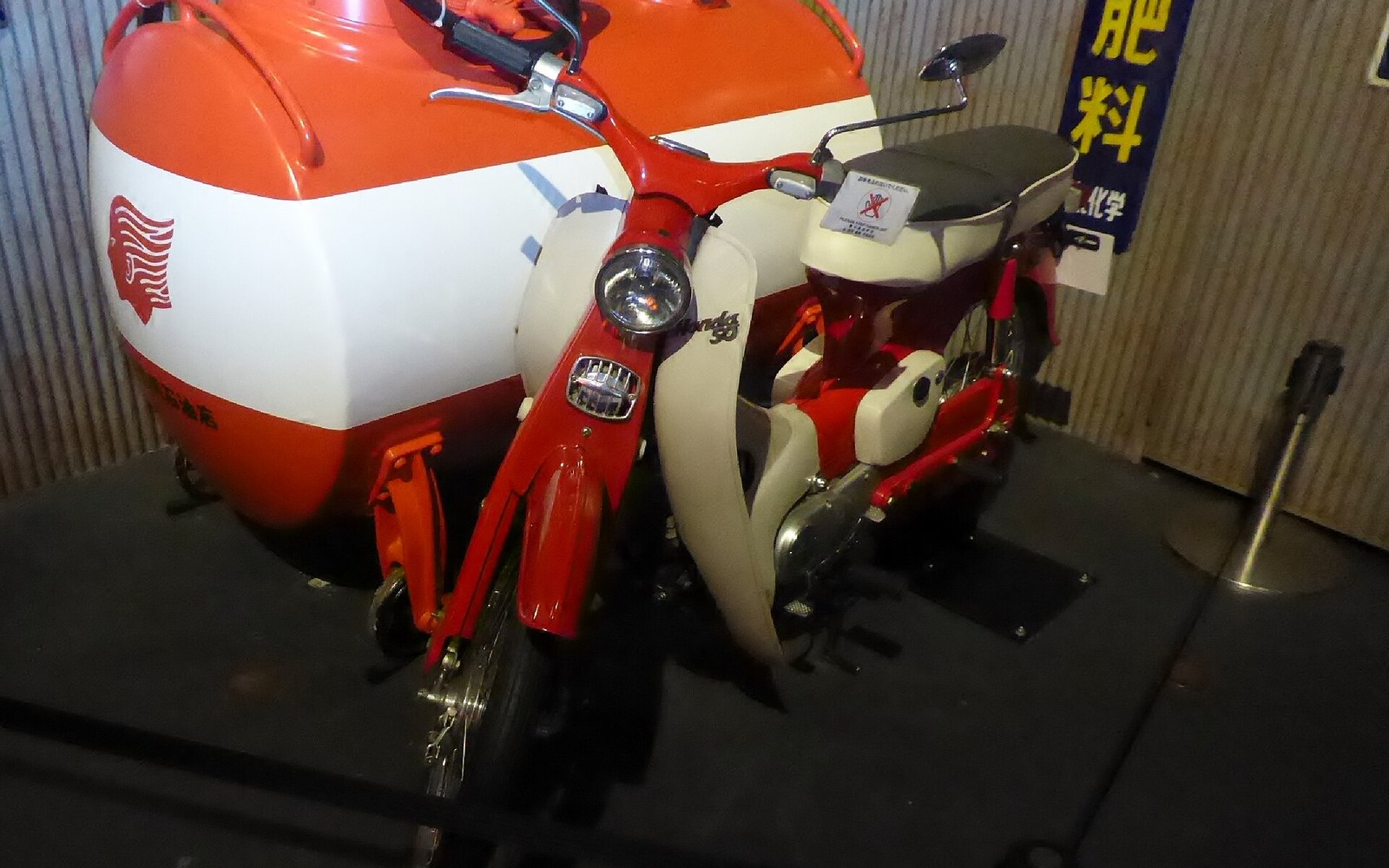
The single model that defines the global market
Honda declared the Super Cub's cumulative production total at 100 million units in 2017, making it the most-produced motorised vehicle in history by that point — a figure Honda has published across multiple commemorative releases. The model entered production in 1958, designed by a team that included engineer Soichiro Honda and styled with a pressed-steel step-through frame intended to lower the barrier to everyday use. From that 1958 baseline to the centenary figure, the timeline runs almost six decades of uninterrupted manufacture across factories in Japan, China, Vietnam, India, Thailand, and beyond.
That accumulated volume is not a triumph of any single displacement variant. The Super Cub has been produced in 50cc, 70cc, 90cc, 100cc, 110cc, and 125cc configurations at different points in its history, with the specific engine size varying by market and decade ↗. What unites every generation is its place in the sub-150cc segment — the band that accounts for the vast majority of global motorcycle registrations and where scooter-format and step-through machines move in enormous numbers through Southeast Asia, South Asia, and sub-Saharan Africa.

The contrast with the North American market is almost geometric in its sharpness. The United States motorcycle market runs heavily toward engines above 500cc — the heavyweight and cruiser segments that define Harley-Davidson's domestic base and where displacement is itself a cultural signal. A machine producing under 200cc is essentially invisible in U.S. retail data. In the markets where the Super Cub actually sells, the calculus reverses: low purchase cost, low running cost, and a form factor that doubles as daily transport in dense urban grids and light rural infrastructure. Honda's own reported figures place total Super Cub production above 100 million across more than 160 countries of sale.
The implications for how the global industry is measured are significant. When organisations such as the Society of Indian Automobile Manufacturers ↗ publish two-wheeler volumes, the numbers include an enormous base of sub-150cc commuter units that simply do not register in the displacement segments most North American enthusiasts track. The Super Cub sits at the heart of that invisible majority.
For the manufacturers that compete in the mid-displacement segment — Royal Enfield, KTM, CFMoto, and the Triumph–Bajaj partnership — the Super Cub's market is largely a different conversation. The 100-million figure is not a competitive benchmark for them; it is a reminder of the market's true floor. What Honda built in 1958 remains in continuous production today, still manufactured in multiple countries, still outselling almost everything else on two wheels. The number will keep moving.