The Number That Reframes the Conversation
When Royal Enfield's parent company, Eicher Motors, files its quarterly results, the volumes that appear look less like a motorcycle brand's output and more like a mass-market scooter maker's. The company has reported annual wholesale figures of approximately one million units in recent fiscal years — a number that places it in a different conversation entirely from what most Western enthusiasts picture when they think about the mid-displacement segment. For comparison, Harley-Davidson reported roughly 150,000 units ↗ sold globally in 2023, a figure well below the company's peak volumes of the mid-2000s. The gap between the two is not a rounding error; it is a structural statement about where motorcycle volume actually lives.
Royal Enfield's chief executive, B. Govindarajan, who succeeded Vinod Dasari in the role, has overseen the expansion phase that pushed volumes past the one-million threshold. The company's manufacturing base is centred in Chennai, India, and its investor communications are filed through Eicher Motors' reports to Indian stock exchanges — public documents that give quarterly and annual wholesale numbers broken out by domestic sales and exports. The domestic Indian market accounts for the overwhelming majority of that volume, with the company's export footprint, though growing, remaining a smaller fraction.
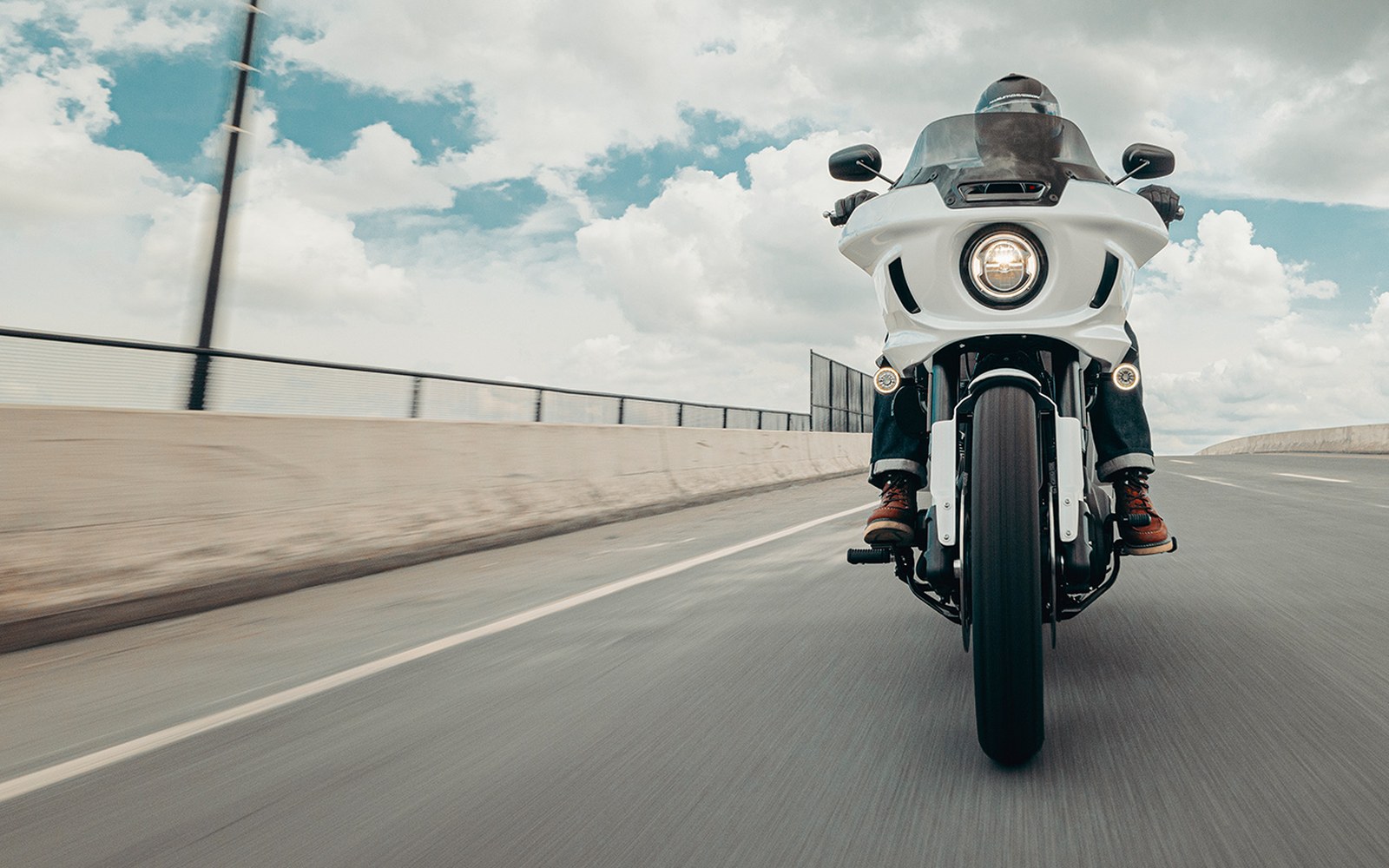
The machine doing most of the work numerically is not the 650 twin. It is the company's older, simpler 350cc platform — the Classic 350, the Meteor 350, the Hunter 350 — that has sustained near-seven-figure annual output. These are single-cylinder, air-cooled engines in the 349cc displacement class, positioned squarely in the price band that dominates Indian two-wheeler demand above the commuter segment. By unit count, they are Royal Enfield's volume engine in every sense.
What the 650 Twin Is, and Why It Matters
The 650 twin platform is a different proposition commercially and technically, and it is the piece of Royal Enfield's catalogue that has commanded the most attention outside India. Introduced at EICMA in Milan in 2017 and reaching showrooms in 2018, the platform uses a 648cc parallel-twin engine producing approximately 47 horsepower — an air- and oil-cooled configuration with fuel injection and a six-speed gearbox. The architecture was developed in Royal Enfield's Technical Centre in the United Kingdom, and the engine specification lands comfortably within what the mid-displacement segment is broadly understood to cover.
Two models are built on it: the INT 650, a classic roadster-styled upright with a relaxed riding position and wire-spoked wheels, and the Continental GT 650, a café racer with clip-on handlebars and a more forward-leaning geometry. Both models are sold globally, including in markets where the Royal Enfield brand is working to establish itself as a legitimate competitor to Triumph Motorcycles' Bonneville-derived lineup and to parallel-twin offerings from Honda and Kawasaki. The 650 twins' pricing in Western markets — typically well below comparable offerings from European or Japanese manufacturers — is structurally part of their competitive proposition, though this is a function of manufacturing economics, not an accident of positioning.

The platform's arrival represented a genuine engineering step for the company. Earlier Royal Enfield models had drawn criticism, sometimes fairly, for build quality and for engines that traced their lineage to mid-century British designs. The 650 twin was built to meet modern emissions standards and to function reliably in a range of regulatory environments, which matters for export viability. Euro 5 compliance, achieved on the current generation, was not optional for European market entry.
The Continental GT 650 has earned particular recognition in the café racer sub-segment, a category that punches above its unit volumes in terms of media attention and brand association. It is not the volume seller — that remains the INT 650 in most markets where both are available — but it carries the brand identity work. For a company trying to project itself as a credible player in markets where Ducati Motor Holding and BMW Motorrad operate, the Continental GT's existence in the catalogue is not accidental.
The Displacement Mix and Its Commercial Logic
Understanding what Royal Enfield's one million units actually are requires holding the 350 platform and the 650 platform in mind simultaneously and recognising that they serve almost entirely different markets. The 350s are Indian domestic volume, filling the space between mass-market commuter machines and the price point where Japanese manufacturers dominate. The 650s are international ambition, present at dealerships in North America, Europe, and Southeast Asia, built in volumes that are meaningful but a fraction of the 350s' output.
NHTSA data ↗ shows the United States motorcycle market as a whole running well under one million new registrations annually in recent years, a figure that contextualises just how dependent Royal Enfield's global volumes are on the Indian domestic market. The company's exports, across all models, have been growing — Eicher Motors investor presentations document the expansion into Latin American and Southeast Asian markets — but the volume story is still predominantly a domestic Indian story.
This matters for how the 650 twin platform should be read. It is not a volume product in the way a Meteor 350 is a volume product. It is the company's proof of concept for technical credibility and international reach. The fact that it exists alongside a one-million-unit annual production figure gives Royal Enfield a kind of commercial flexibility that Harley-Davidson, with its far smaller global base, does not have. Jochen Zeitz's Hardwire strategy at Harley-Davidson has prioritised premium pricing and selective model rationalisation precisely because Harley operates without the volume cushion that Royal Enfield's Indian domestic dominance provides.
The mid-displacement segment as a whole is genuinely contested in ways it was not a decade ago. KTM AG, Stefan Pierer's Mattighofen-based group, has built substantial volume in the 390–690cc range before its recent financial difficulties. CFMoto and other Chinese manufacturers have entered the same displacement band at lower price points. Triumph, through its partnership with Bajaj Auto in Pune, now has the Speed 400 and Scrambler 400 X positioned just below the 650 twin's price point. In that context, Royal Enfield's decision to develop and sustain the 650 platform looks strategically durable — the company entered the contested middle of the market with a product it controls entirely and a cost structure built on Indian manufacturing.
One million units is the headline. The breakdown behind it explains both the company's security and its ceiling: enormous volume in a single national market, a globally credible mid-displacement platform still building its international footprint, and a price positioning that works best when the brand's manufacturing economics remain its primary competitive tool.